Motor insurance for business vehicles
What motor insurance for company vehicles covers, why third-party cover is required by law, and the difference between third-party, part and comprehensive cover.
Motor insurance protects your company's cars and other vehicles. Trafikförsäkring, the third-party part, is required by law for every vehicle on the road and pays for injuries to people and damage to other people's property. Additional cover can protect your own vehicle against specified risks. Vehicles are not part of ordinary business insurance and are insured separately.
How motor insurance works
- Something happens to the vehicle. A collision, a theft, a stone in the windscreen or a fire.
- You report it. In an accident involving another party, you fill in a claim form together. Report a theft to the police.
- The insurer investigates. It assesses what happened and which part of the policy applies.
- The claim is assessed. Depending on the cover, the insurer may pay for repairs, the vehicle's value if it is written off, or damage to another person's property, subject to the policy terms.
What it covers
Third-party cover
The compulsory part, called trafikförsäkring in Swedish. It pays for injuries to the driver, passengers and other road users, and for damage the vehicle causes to other people's property. It does not pay for damage to your own vehicle.
Partial cover
Third-party cover plus protection for your own vehicle against things like theft, fire, glass damage and mechanical breakdown. This is known as halvförsäkring in Sweden. The exact cover varies between insurers.
Comprehensive cover
Partial cover plus own-damage cover (vagnskada), which pays for damage to your own vehicle in an accident, even when your driver caused it. This is known as helförsäkring in Sweden.
Several vehicles
If your business has several vehicles, they can often be insured under a single policy, sometimes called fleet insurance. That makes it easier to add and remove vehicles.
What is not usually covered
- Things inside the vehicle. Tools and goods being carried are usually covered by property insurance, and only if the policy terms say so.
- Wear and tear and lack of maintenance. Damage that built up over time is not covered.
- Unauthorised drivers. If someone drives without a licence, or under the influence, the payout can be reduced or refused.
- Private cars used for work. An employee who drives their own car for work is normally covered by their own car insurance, not the company's.
Who needs motor insurance?
Every company that owns or leases a vehicle used on the road must have third-party cover. Partial and comprehensive cover may be particularly useful to companies that depend on their vehicles, such as tradespeople, transport and haulage companies and service businesses. If you lease the vehicle, the leasing company often requires comprehensive cover.
How much does it cost?
The premium depends on the type and value of the vehicle, how much it is driven, where it is used, who drives it and the level of cover you choose. The deductible matters too. There is more on what affects the price of a company's insurance in the guide what does business insurance cost.
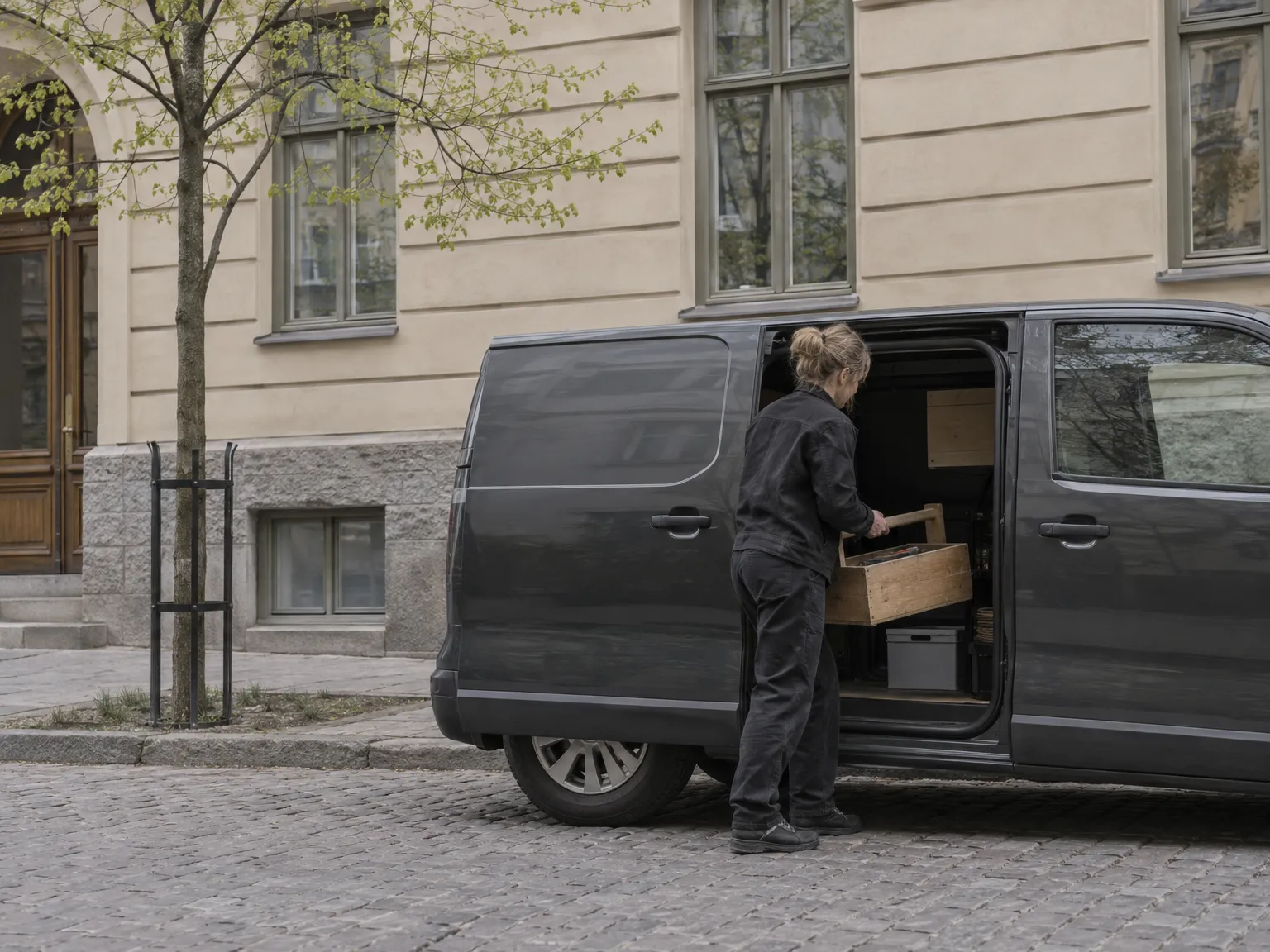
Example: Reversing on a building site. An electrician reverses the company van into a gate on a building site. The gate and the back of the van are damaged. Third-party cover pays for the gate, which belongs to someone else. The damage to the van is paid by own-damage cover, because the van is comprehensively insured.
Frequently asked questions
Do company cars need third-party cover?
Yes. By law, every vehicle used on the road must have trafikförsäkring, including company vehicles. A registered vehicle must have it even when it is parked, as long as it has not been formally taken off the road (avställt). Read more in the guide is business insurance compulsory.
Are vehicles included in business insurance?
No, usually not. Vehicles are insured with separate motor insurance. The guide which insurance does my company need explains when it becomes relevant.
What happens if a vehicle has no third-party cover?
The owner has to pay a fee to Trafikförsäkringsföreningen, the Swedish Motor Insurers. People injured by an uninsured vehicle may still be entitled to compensation.